
How to Choose the Right Delivery Bike for Your Fleet
The right delivery bike for a UAE fleet is one that matches the route, load, daily distance, rider, and local rules while keeping fuel, service, and downtime costs under control. For most busy urban routes, start with a reliable 100cc to 200cc motorcycle that has stable handling, an approved box setup, easy access to spare parts, and dependable after-sales support.
In Dubai, this engine size is part of the current technical requirements for delivery motorcycles.
The lowest purchase price should not decide the order. A cheap motorcycle that spends too much time in the workshop can cost more than a better-supported model. The best delivery bikes for fleets in the UAE are the ones that remain safe, productive, and economical through daily stop-and-go work.
Why the Right Delivery Bike Matters
A delivery motorcycle is a working asset. Every breakdown can delay orders, reduce rider productivity, and increase customer complaints. A cheaper bike may cost more over time if it uses more fuel, wears parts quickly, or stays in the workshop for days.
Delivery motorcycles face stop-start traffic, long shifts, heavy use, dust, heat, and frequent braking. Summer heat can affect both the rider and the motorcycle, so regular checks, rest breaks, hydration, and suitable protective equipment should form part of fleet planning.
The best delivery bikes for fleets in UAE are not always the fastest or most powerful. The best bike is the one that completes the required work safely, reliably, and at a predictable cost.
1. Start With the Delivery Job
Before comparing models, document what each bike must do. A restaurant running lunch and dinner orders in one neighbourhood has different needs from a courier company crossing several delivery zones. The same applies to grocery, pharmacy, e-commerce, and document delivery fleets.
Record these details first:
- Average and peak deliveries per shift
- Typical daily distance per bike
- Number of riding hours and shifts per day
- Urban streets, highways, industrial areas, or mixed routes
- Rider weight plus normal cargo weight
- Delivery box size and insulation needs
- Hot, chilled, fragile, or dry goods
- Refuelling or charging access
- Expected fleet growth over the next 12 to 24 months
This simple route profile prevents overbuying and under-specifying. A larger engine may add cost without improving performance on short city routes. A light bike may save fuel but feel unstable if the rear box is badly loaded. Good fleet bike selection starts with actual operating conditions, not brochure claims.
2. Check UAE Compliance First
Compliance should be a purchase filter, not a task left until the bikes arrive. Requirements can differ by emirate and delivery activity, so confirm the current rules for every operating area before signing a purchase or lease agreement.
For delivery motorcycles registered in Dubai, current requirements include GCC specifications, approved vehicle testing, Dubai registration, valid UAE insurance, and an engine capacity between 100cc and 200cc. The motorcycle’s lifespan must not exceed four years from its manufacturing date under the published delivery manual.
RTA also sets detailed requirements for delivery boxes. The box must not exceed 50 cm in length, width, or height and must be securely attached to the rear of the motorcycle, with no gaps between the box and the bike body, without obstructing the rider’s mirror view. It must be made from materials other than wood or metal, have rounded edges without sharp corners, and have all corners covered with reflective phosphorescent tape. The company or service provider’s name must appear on the back of the box, while advertising materials may be placed on its sides. The box’s rear extension must not exceed the motorcycle frame and must comply with the prescribed maximum-level restriction. The box must always be kept clean, meet all specifications mandated by the authority, and comply with Dubai Municipality’s food safety requirements when used for food delivery.
Delivery riders in Dubai need a valid UAE motorcycle licence and the required professional training and qualification certificate. The company must ensure that both remain valid before a rider operates a delivery motorcycle.
Before procurement, ask these questions:
- Is the exact motorcycle approved for the intended commercial activity?
- Can it be registered and insured as required?
- Will the delivery box and mounting system meet current rules?
- Are commercial plates, testing, or additional equipment required?
- Does the planned branding need separate approval?
- Are the rider licence, training, uniform, and safety requirements covered?
Rules can change. Confirm current requirements with the relevant transport, licensing, municipality, and insurance authorities before deployment.
3. Choose the Engine Class
Engine size should fit the route, cargo, and legal limits. A larger engine is not automatically better. It can add purchase cost, weight, and fuel use without improving delivery output on short urban routes.
A lower-capacity bike may suit light food or document deliveries in compact zones. A mid-capacity motorcycle can offer a useful balance of fuel use, stability, and performance for longer urban routes or moderate loads. Bikes near the upper legal capacity may suit demanding routes, but only when the extra performance is genuinely needed.
Use these practical checks:
- Confirm that the engine capacity meets local commercial delivery rules
- Test acceleration with the normal rider, box, and cargo load
- Check low-speed balance in stop-start traffic
- Check stability during braking and turns
- Review fuel use on the actual route type
- Avoid selecting by top speed, since delivery work depends more on control and uptime
4. Measure Real Fuel Economy
Fuel-efficient delivery bikes can reduce a major recurring fleet cost, but brochure figures do not show the whole picture. Real consumption changes with rider habits, load, traffic, idle time, tyre pressure, maintenance condition, and route density.
Run a controlled pilot and track:
- Litres used per 100 km
- Fuel cost per completed delivery
- Kilometres travelled per shift
- Idling time
- Unplanned refuelling stops
- Differences between riders and routes
Use the same cargo load and similar routes when comparing motorcycles. A fair test helps separate bike performance from route and rider differences.
Tank size matters too. A larger tank can reduce refuelling interruptions, but it should not outweigh reliability, maintenance access, or rider comfort. The goal is enough practical range for the shift, not the largest tank available.
5. Focus on Uptime
Reliable motorcycles for delivery should be easy to inspect, service, and return to work. A fleet earns money when bikes are available, not when they sit in a workshop waiting for a small part.
Look for low-maintenance delivery motorcycles with:
- A simple and proven engine design
- Easy access to regular service points
- Common tyre and consumable sizes
- Readily available brake parts, filters, chains, cables, and electrical items
- Clear service intervals
- Trained local technicians
- Genuine spare parts in the UAE
- Warranty terms suited to commercial use
- Fast roadside or workshop support
- Replacement-bike support, if offered
Ask the supplier for written answers. Do not accept a general promise that parts are available. Request expected lead times for common service items and less common components. Also ask how warranty claims work for high-use commercial motorcycles.
Preventive maintenance should follow distance, usage, and manufacturer guidance. Daily checks should cover tyres, brakes, lights, controls, oil or fluid levels, chain condition, leaks, mirrors, phone mount, box mount, and visible damage. Regular inspection of tyres, brakes, oil, and other essential parts helps reduce unexpected failures, especially during hot months.
6. Protect Rider Comfort
Rider comfort affects consistency, concentration, and safe control. A motorcycle that feels acceptable during a ten-minute test may become tiring during a long shift.
Evaluate these areas with actual delivery riders:
- Natural upright riding position
- Comfortable seat shape and padding
- Reach to handlebars, levers, and foot controls
- Mirror visibility with the delivery box fitted
- Vibration through the seat, bars, and footrests
- Heat reaching the rider from the engine and exhaust
- Suspension response over speed humps and uneven roads
- Ease of placing both feet down at stops
- Effort needed to use the clutch and gears in traffic
- Space for an approved phone holder without blocking controls or instruments
Dubai’s delivery rules require a mounted phone holder for navigation and prohibit riders from using the phone while riding. This makes the mount position, screen visibility, and charging setup practical procurement details, not optional extras.
7. Check Safety and Handling
Delivery fleet motorcycles should remain predictable when loaded. Inspect the complete setup, including the box, rack, tyres, suspension, brakes, lights, mirrors, and phone holder.
During a loaded test ride, check:
- Straight-line stability
- Steering at low speed
- Braking distance and control
- Balance during tight turns
- Suspension movement over bumps
- Rear-end sag with cargo
- Mirror visibility
- Side-stand and centre-stand stability
- Headlight and brake-light visibility
- Box movement, vibration, and fastener security
The delivery box must not interfere with the rider’s view or extend in a way that creates poor balance. Dubai requirements also prohibit unapproved modifications, so confirm any rack, box, lighting, branding, or electrical changes before fitting them.
Safety equipment and rider training remain essential even with the right motorcycle. A strong bike cannot correct unsafe loading, worn tyres, rider fatigue, poor maintenance, or unrealistic delivery targets.
8. Compare Total Ownership Cost
Purchase price is only one line in the fleet budget. Use total cost of ownership, or TCO, to compare each shortlisted delivery bike over the expected operating period.
Include these costs:
- Purchase price or lease payments
- Finance cost
- Fuel or electricity
- Scheduled servicing
- Tyres, chains, brake parts, filters, batteries, and other consumables
- Unplanned repairs
- Insurance and registration
- Testing, permits, and required equipment
- Delivery box and mounting system
- Telematics, phone mounts, and charging equipment
- Workshop transport and roadside support
- Replacement-bike costs
- Downtime and missed delivery capacity
- Expected resale value
A simple working formula is:
TCO per bike = acquisition or lease cost + operating costs + compliance costs + downtime costs – resale value
Then calculate:
Cost per delivery = total fleet cost for the period / completed deliveries in the same period
9. Run a Fleet Pilot
Do not move from a brochure straight to a large order. Test a representative group of shortlisted delivery motorcycles under normal working conditions.
A useful pilot should include:
- Fit the approved delivery box and all required equipment.
- Assign different riders to reduce personal preference bias.
- Use real delivery routes and normal cargo loads.
- Record fuel use, completed orders, delays, faults, and maintenance time.
- Ask riders to score comfort, controls, heat, braking, and stability.
- Inspect box mounts, tyres, brakes, chain, and suspension throughout the test.
- Compare supplier response time when a part or service request is raised.
- Calculate actual cost per delivery.
Keep the test conditions as consistent as possible. One motorcycle should not receive a lighter route or smaller load than another. Use the pilot data to choose the model and build the final service plan.
10. Questions to Ask Suppliers
Use this checklist when comparing delivery motorcycle UAE suppliers:
- Which models meet current commercial delivery requirements in the target emirate?
- What is the approved load, including rider, box, cargo, and accessories?
- Which box and rack systems are compatible?
- What are the service intervals for high-use fleet operation?
- Which parts are kept in UAE stock?
- What is the usual service turnaround time?
- Is roadside assistance available across the operating area?
- What does the warranty cover for commercial delivery use?
- Can the supplier support phased fleet growth?
- Are fleet sales, finance, rental, or leasing available?
- Can telematics or GPS equipment be installed legally and safely?
- What training is provided for riders or in-house technicians?
- Can a loaded pilot be arranged before the full order?
Get the final specification, inclusions, warranty, support response, and delivery schedule in writing.
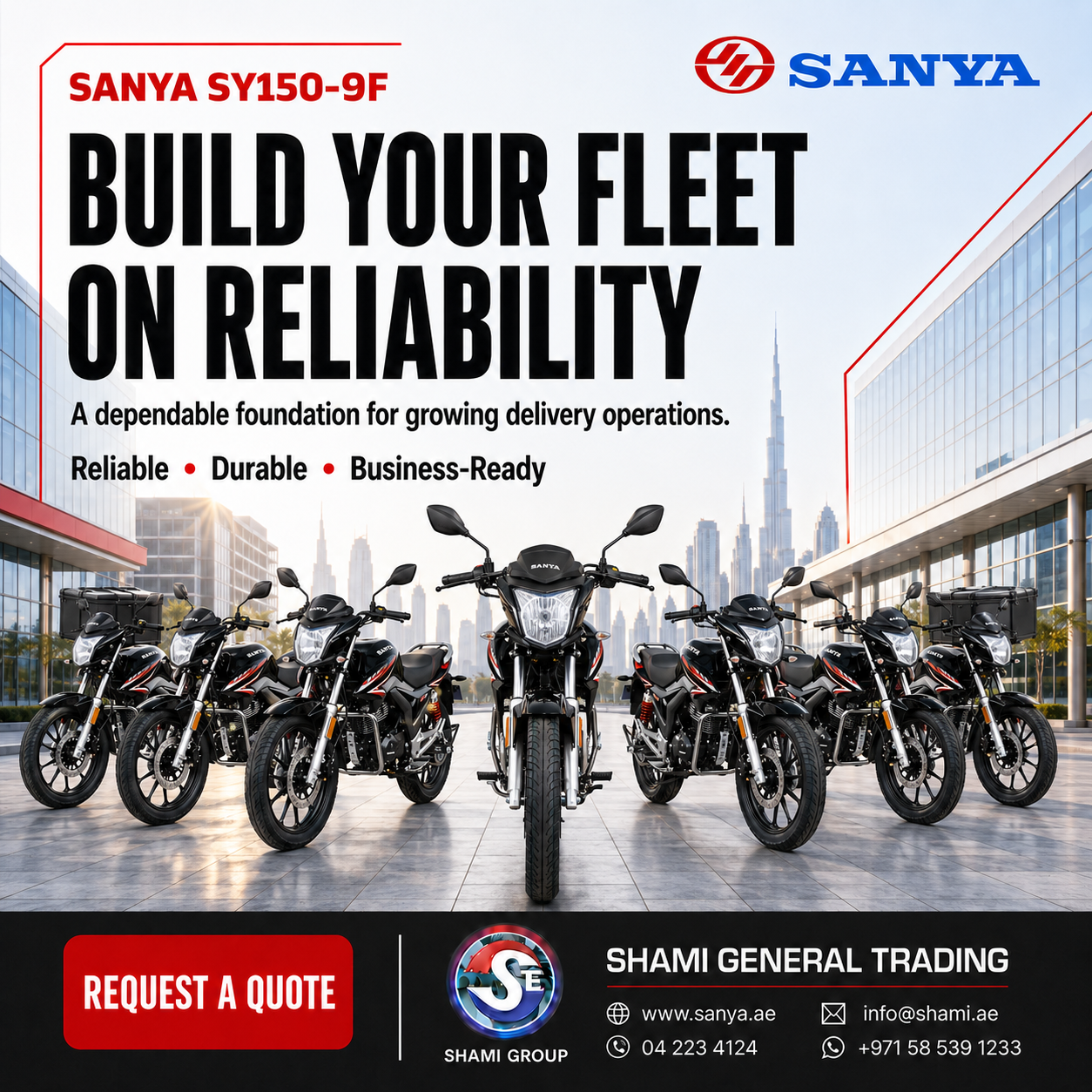
Build your Fleet on Reliability that Delivers More
The right delivery bike lowers operating stress, supports riders, protects uptime, and keeps costs easier to control. Start with your route and cargo, confirm UAE compliance, compare real running costs, test each bike under load, and choose a supplier that can support the fleet after the sale.
Sanya Motorcycles has more than two decades of two-wheeler experience and is represented in the Middle East by Shami General Trading LLC. The authorised UAE operation supports motorcycle sales, service, and genuine spare parts.
Visit Sanya.ae to discuss your routes, fleet size, delivery box needs, purchase or leasing options, and after-sales requirements before selecting your next delivery fleet motorcycles.

